
Razz Poker: The Lowball Stud Game Explained
Razz poker is the game that takes everything you know about seven-card stud and turns it upside down. Instead of chasing the best hand, you're chasing the worst one — aces are low, and straights or flushes don't count against you. If you already know how stud is dealt, razz will feel familiar in structure but strange in strategy, since every exposed card now signals who's ahead in the race to the bottom. For a broader look at how stud games branch into different formats, our poker variants guide is worth a look after this one.
This article covers what razz poker is, how a hand plays out street by street, and the skill of reading opponents' up-cards to judge who's drawing to the best low. We won't cover high-hand stud strategy or hi-lo split pots here — that lives in our seven-card stud guide — and we won't get into four-card lowball draws like badugi, a different structure entirely.
What Makes Razz Poker Different From Stud Poker
Razz poker uses the same seven-card stud dealing structure you already know — two down cards, four up, one final down card, with betting after each street. The difference is the goal. The best possible hand is A-2-3-4-5, often called a wheel, and pairs actively hurt you instead of helping. There are no straights or flushes to worry about, which simplifies hand reading in one sense but complicates it in another: you're scanning up-cards for low, scattered ranks rather than connected or suited ones.
I've watched strong stud players struggle in their first razz sessions simply because their instincts point the wrong way. Seeing three low cards on the board still feels threatening if you're wired for high poker. The fastest fix, in my experience, is to rank hands from the bottom up before every decision.
How Razz Poker Rules Work, Street by Street
Every player antes, then receives two down cards and one up card. The player showing the highest up card posts the bring-in, a forced small bet that starts the action — a detail that surprises new players, since the worst-looking hand is forced to act first. From there, streets follow the familiar rhythm: fourth, fifth, sixth, and seventh street (dealt face down), with a betting round after each.
The player with the lowest up cards showing typically leads the betting on later streets, flipping the usual stud dynamic where the best-looking hand drives the action. Limit razz poker, the most common format, caps bet sizes at fixed increments per street, rewarding patient, math-driven play over aggression.
- Third street: two down cards, one up card; highest up card posts the bring-in.
- Fourth through sixth street: one up card dealt each round, with betting after every card.
- Seventh street: final card dealt face down; last betting round before showdown.
- Showdown: lowest five-card hand from your seven cards wins the pot.

Reading Exposed Cards: The Core Razz Poker Strategy Skill
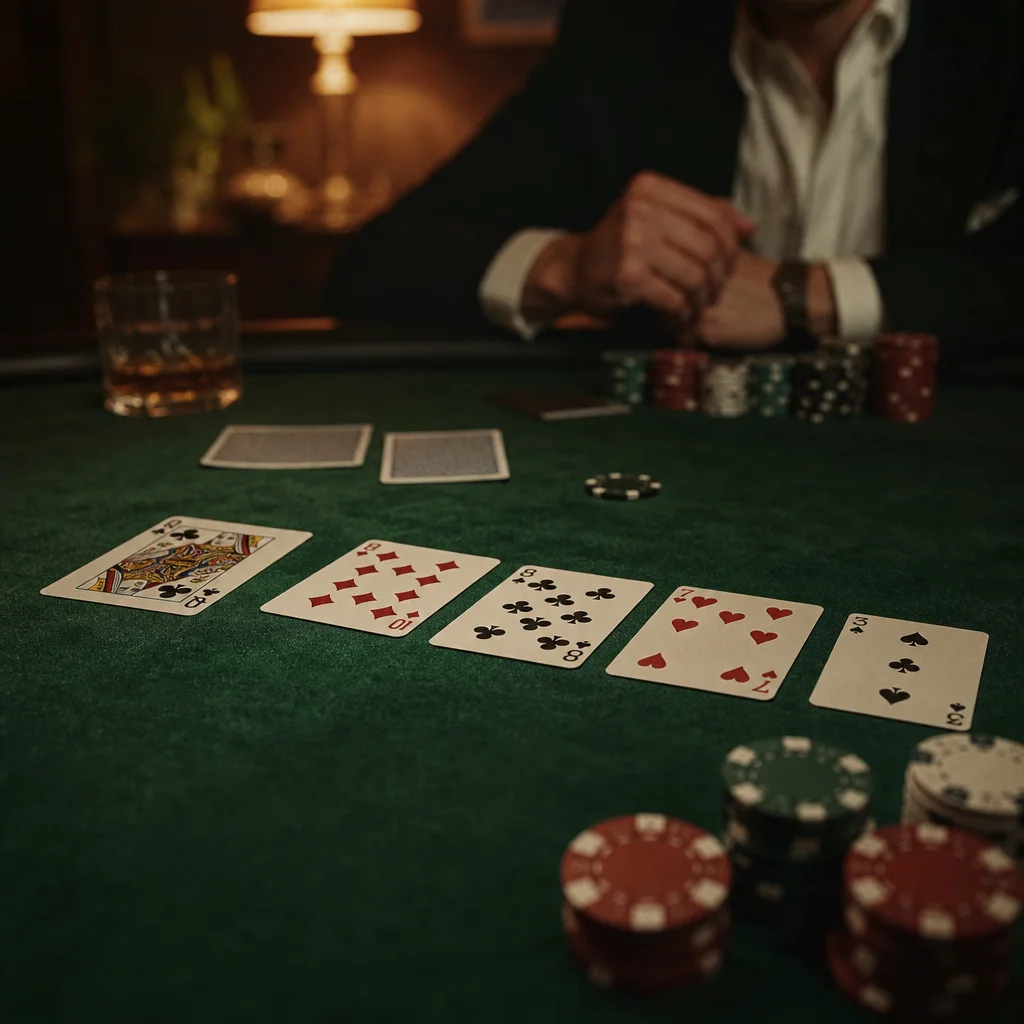
Because four of each opponent's seven cards are visible, razz strategy leans heavily on live-card reading rather than pure hand-value math. If you're holding three low cards to a wheel draw, but two needed ranks are already showing elsewhere, your actual chances drop. Strong razz players track which low cards are dead before deciding whether to continue.
Quick Read on Exposed Cards
This is also where patience matters more than in most stud variants. A player showing three low, unpaired cards by fifth street is usually still live for the best hand, and folding a marginal draw against that board is often correct. After tracking dozens of razz sessions, I've found the consistent winners fold fast against clearly live low boards.
Where Razz Fits Among Stud Poker Variants
Razz sits inside the broader stud poker family alongside seven-card stud and seven-card stud hi-lo, sharing the same deal structure but changing the target hand entirely. For the high-hand strategy and hi-lo split-pot mechanics of traditional stud, our seven-card stud guide covers that ground rather than duplicating it here. Razz also gets grouped loosely with badugi, though the resemblance is mostly in spirit — badugi uses a four-card draw structure with suits mattering, different enough to deserve its own guide.
Some players study razz hands away from the table using solvers or trainers, since low-hand math takes practice to internalize. Others rely on in-hand tools during live play, though that's a different category entirely. NZT Poker, for one, is a real-time assistance app built for Asian club-app platforms like PokerBros and PPPoker rather than for razz specifically, and using any in-hand assistant during a live hand violates the terms of service at essentially every room that spreads razz. For the canonical rule set, see Pagat's Razz rules.
Want a Broader Map of Poker Variants?
See how razz connects to other stud and lowball formats in this guide.
See the Poker Variants GuideDisclosure: This page contains affiliate links. We may earn a commission at no extra cost to you.