
Types of Poker: The Complete Guide to Every Major Variant
Poker's family tree runs far wider than most players realize, spanning dozens of types of poker with their own betting rounds, hand rankings, and community-card rules. If you already know one poker game, you're closer than you think to understanding the rest, since most variants borrow structure from a handful of core families.
Whether you're comparing games before your next session or want popular types of poker explained side by side, you'll find the full map here. Our poker variants guide hub links to deeper strategy pages, so treat this as the starting index.
Draw Poker
Draw poker is the oldest structural family, and it's the one most home games start with. Five-Card Draw deals five cards face down, and each player can swap cards before a single betting round decides the pot. Our Five-Card Draw guide covers the full rule set — this is simple and a strong entry point for new players.
2-7 Triple Draw flips the hand rankings upside down, rewarding the worst-looking hand, and adds two extra draw rounds — one of the other types of poker worth recognizing on a mixed-game menu.
Stud Poker
Stud games deal a mix of face-up and face-down cards with no community cards, forcing players to track exposed information across streets. Seven-Card Stud was the dominant American poker game before Texas Hold'em took over in the 2000s.
Razz uses the same stud structure but, like 2-7 Triple Draw, awards the pot to the lowest hand. Both appear in mixed-game rotations — we leave that strategy to our HORSE poker guide.
Community Card Poker
This is the family most players learn first today. Texas Hold'em deals two hole cards and builds a shared five-card board across the flop, turn, and river — the game behind the WSOP Main Event. Omaha follows the same structure but deals four hole cards, requiring exactly two in the final hand.
Short Deck Hold'em, or Six Plus, removes cards below 6 and rebalances hand values so flushes beat full houses. Among the main types of poker, it's grown fastest in high-stakes cash games. The table below sorts variants by difficulty.
| Variant | Family | Learning Curve | Where You'll Find It |
|---|---|---|---|
| Texas Hold'em | Community Card | Easy | Everywhere |
| Omaha (PLO) | Community Card | Moderate | Cash games, tournaments |
| Seven-Card Stud | Stud | Moderate | Mixed games |
| Five-Card Draw | Draw | Easy | Home games, some apps |
| Short Deck Hold'em | Community Card | Hard | High-stakes cash |
| Razz | Stud | Hard | Mixed-game rotations |
Two Useful Ways to Sort Types of Poker
Ask what are the two types of poker and most players answer: draw versus community card games, or high hands versus low hands. Draw games keep every card private until showdown, while community games like Hold'em share a public board.
The second cut, high versus low, decides which hand wins: standard games reward the strongest five cards, while variants like Razz reward the weakest. Knowing both splits helps you size up an unfamiliar game fast.
Format Matters as Much as Game Type
Beyond which cards get dealt, format changes how a hand plays out. Cash games let you buy in for a fixed range and leave anytime, with blinds that never increase. Tournaments start everyone with equal stacks and rising blinds.
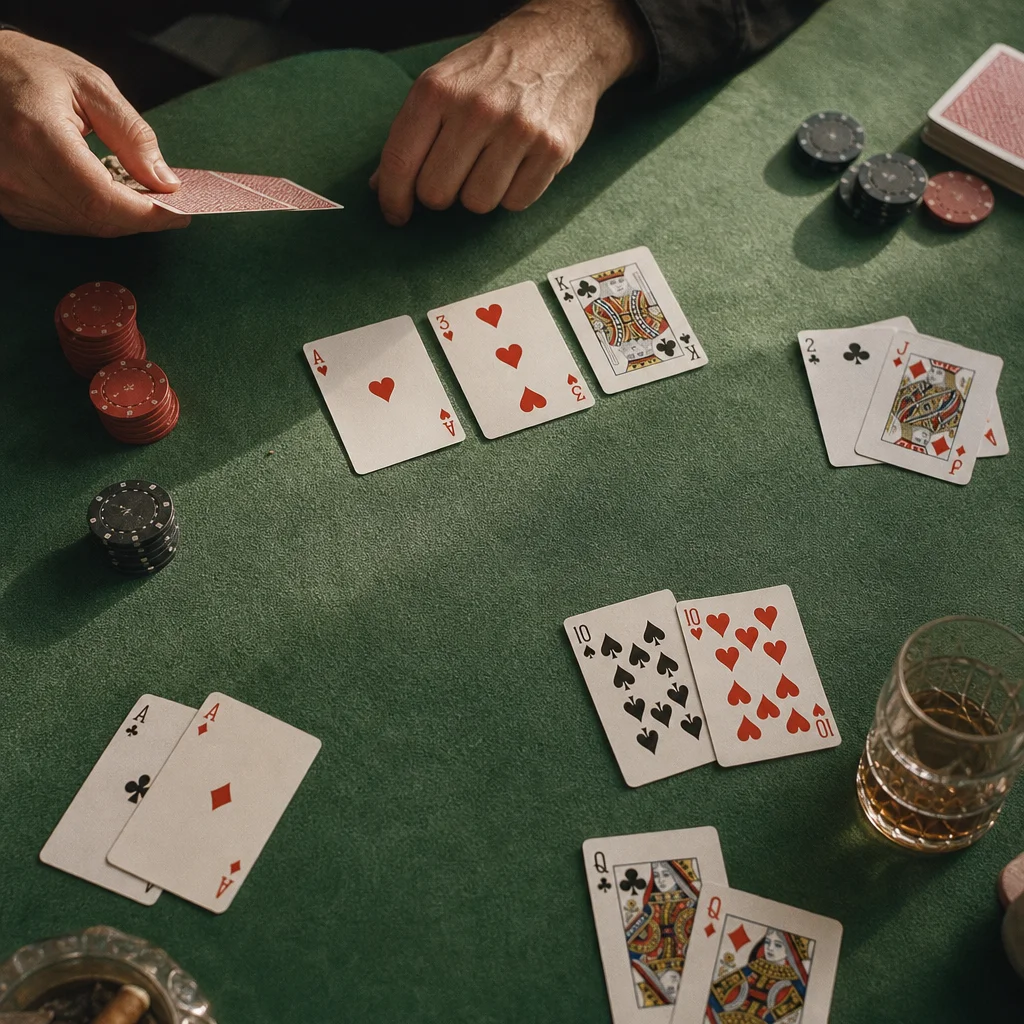
None of these are separate types of poker in the rules sense — Hold'em is still Hold'em cash or tournament — but format changes strategy enough to treat as its own axis.
Where Software Fits Into Learning the Game
Once you've settled on a variant, most players lean on a study or assistance tool. HUDs like Hand2Note track opponent tendencies but leave the decision to you, and solvers like PioSolver let you study spots away from the table — both stay within the rules almost everywhere.
NZT Poker takes a different approach: a real-time assistance tool for the Asian club-app ecosystem, including PokerKing and PPPoker, that suggests an action during the hand itself — a different category from a HUD or solver, and against the rules on nearly every platform it supports.
Pro Tip
Picking Your First Variant
For a first game, Five-Card Draw and Texas Hold'em remain the easiest types of poker to learn, since both use clean hand rankings and skip the memory work stud games demand. Omaha is a natural second game since it reuses Hold'em's board structure. For the canonical rule set, see list of poker variants.
Want the Full Variant-by-Variant Breakdown?
One option worth exploring if you want deeper rules and strategy for each game covered here.
Explore the Poker Variants GuideDisclosure: This page contains affiliate links. We may earn a commission at no extra cost to you.