
Omaha Poker: Variants, Rules and Strategy Hub
Roughly one in five real-money poker hands dealt online today is some form of omaha poker, not Texas Hold'em — a bigger share than most Hold'em regulars realize. If you already play Hold'em and you're wondering what changes when a hand deals you four cards instead of two, this page is the starting point. We'll cover where omaha poker came from, why four cards became the standard, and how the hi, hi-lo, and pot-limit branches relate to each other. For the hand-by-hand mechanics, our how to play Omaha guide picks up where this page leaves off, and if you want a second opinion while you study hands away from the table, NZT Poker's variants guide is one resource worth a look.
Where Omaha Poker Came From
Omaha poker traces back to American card rooms in the 1980s, where operators wanted a game that produced bigger action than Hold'em without changing the basic betting structure. The four-hole-card format did exactly that. Because every player holds more cards, more players make strong hands on the same board, and pots tend to grow. Casinos in Las Vegas picked up the game quickly, and it spread from there into the wider poker economy, including the club-app ecosystem where much of today's Asian online volume runs.
Why Omaha Uses Four Cards Instead of Two
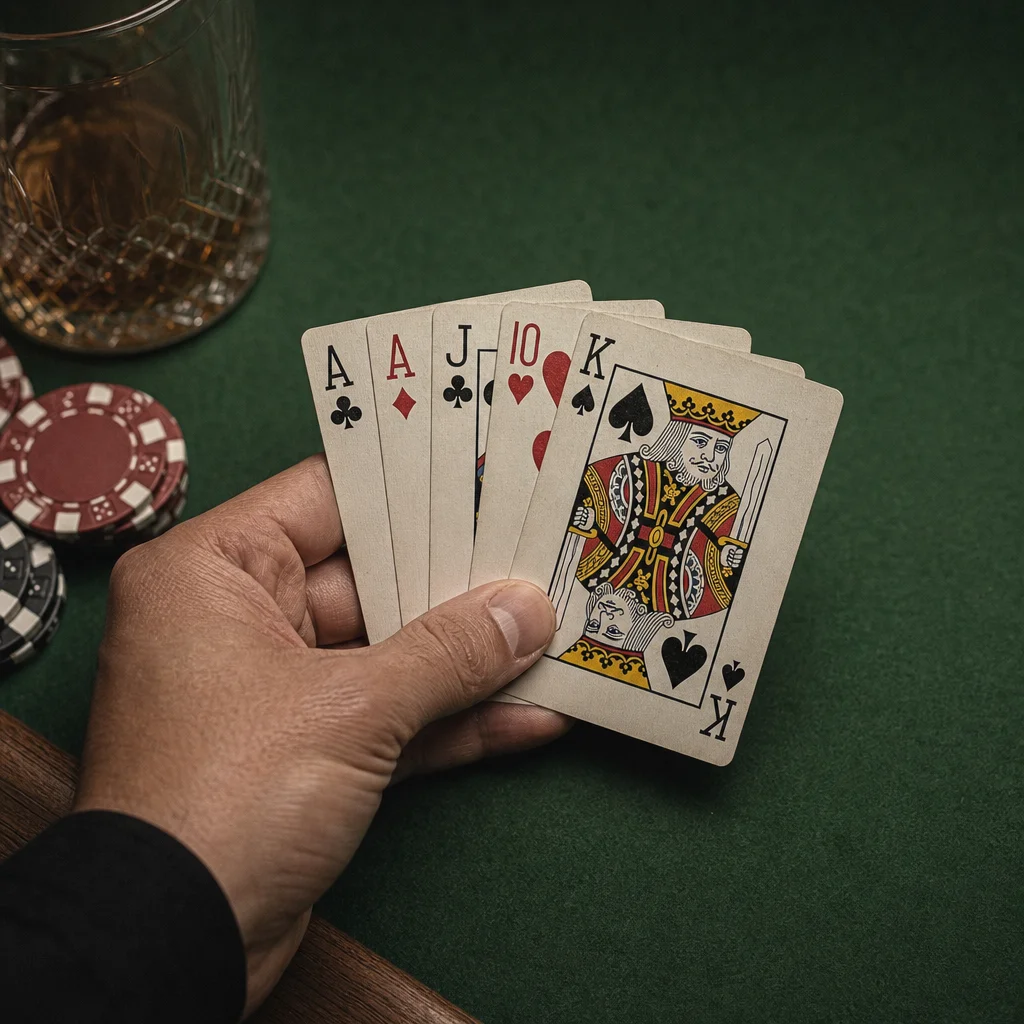
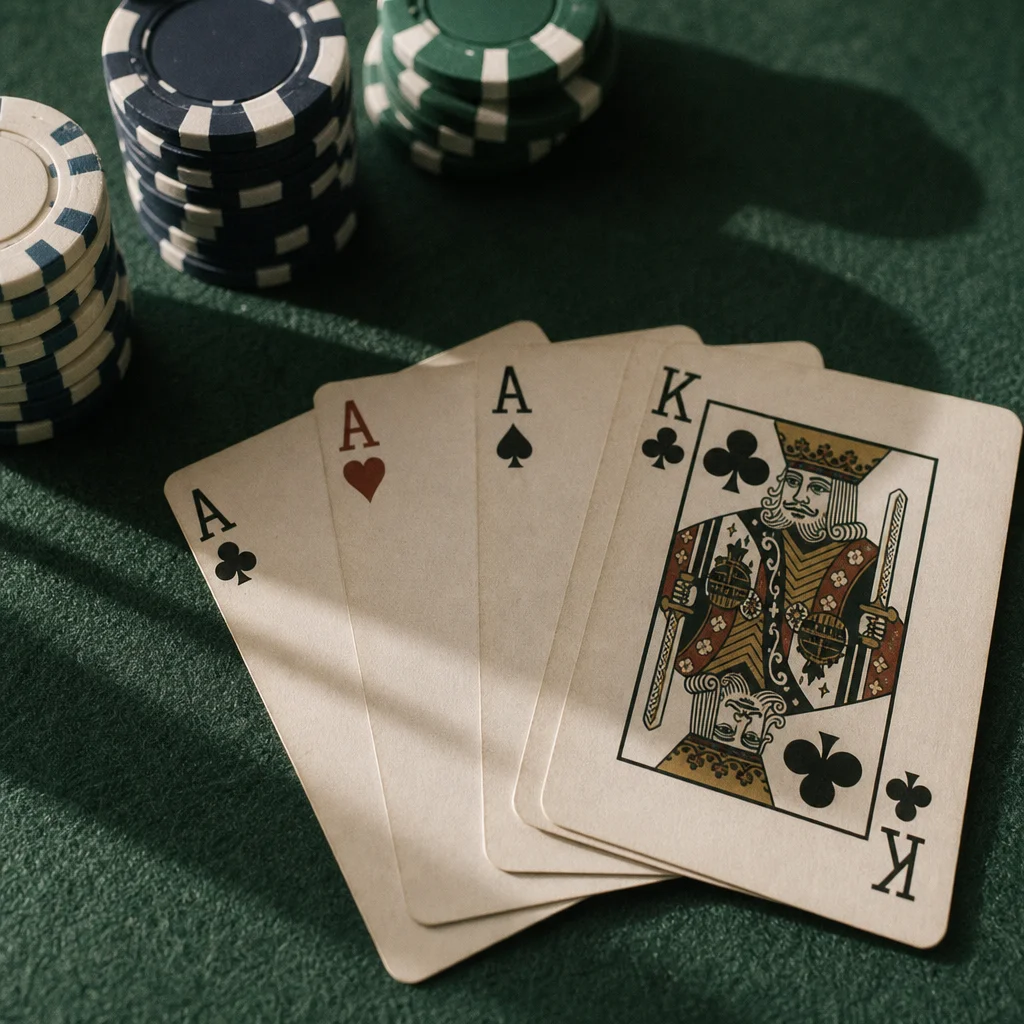
The defining rule of the omaha poker game is the one that trips up new players: you must use exactly two of your four hole cards and exactly three of the five community cards to make your final hand — never one, three, or four from your hand. In my experience watching Hold'em players try Omaha cold, this single rule causes more misread hands in the first session than any other. Four cards also mean more possible two-card combinations, which is why Omaha hands run closer together in strength and why post-flop decisions carry more weight than they do in Hold'em.
The Main Omaha Poker Variants
Once you understand the four-card, two-plus-three rule, the rest of the omaha poker family is a set of variations on betting structure and how the pot gets split. Here's the branch structure at a glance.
- Omaha Hi — standard pot-limit or no-limit format, best five-card hand wins the whole pot, the closest cousin to Hold'em
- Omaha Hi-Lo (Omaha/8) — the pot splits between the best high hand and the best qualifying low hand, which rewards a different starting-hand strategy entirely
- Pot-Limit Omaha (PLO) — the dominant betting structure for Omaha Hi online, where bet sizing is capped at the pot rather than open-ended
- Five-Card Omaha and Courchevel — less common spin-offs that add a card or change the first betting round, mostly seen in mixed-game formats
PLO is worth calling out on its own because pot-sized betting changes hand values and bluffing math in ways flat no-limit doesn't. We cover that mechanic in full on our pot-limit Omaha page — this hub stays focused on how the branches connect rather than how any one of them plays out street by street.
Hi vs Hi-Lo, Quickly
How Popular Is Omaha Poker Today
Omaha poker, and PLO specifically, has held the number-two spot behind Hold'em on most major online networks for over a decade. It's especially strong in Europe and on the Asian club-app networks, where PLO often runs alongside Hold'em as a standing game rather than an occasional spread. That's part of why so many Hold'em regulars eventually branch out: the player pool is real, and the skill gap against unprepared opponents is often wider than in Hold'em, simply because fewer players have studied it deeply.
Studying Omaha Away From the Table
Because Omaha hands run closer in strength, most serious players study equities and ranges between sessions rather than guessing live. A solver such as PioSolver or a trainer like GTO Wizard is the standard way to do that work away from the table, and both stay within every room's rules since you're not consulting anything during a hand. If you want a broader map of how the variants differ before you commit study time to one branch, NZT Poker's variants guide covers the same ground from a software-first angle — worth a look alongside a solver, not instead of one. For the canonical rule set, see Omaha hold 'em.
Ready to Pick Your Omaha Branch?
A quick side-by-side of Omaha Hi, Hi-Lo, and PLO if you want the full picture before you specialize.
See the Variants GuideDisclosure: This page contains affiliate links. We may earn a commission at no extra cost to you.
Frequently Asked Questions
What is Omaha poker?
Why is it called Omaha poker?
When was Omaha poker invented?
Is Omaha poker popular?
What does 'Omaha' mean in poker?