

Texas Hold'em Starting Hands: Ranges & Playability
Every texas hold'em hand starts the same way: two cards, no context, and a decision. There are only 169 distinct texas hold'em starting hands once you strip out suit symmetry, yet most losing players make their biggest mistake before the flop even lands. You already know how a flush beats a straight — that's the easy part. What separates a break-even player from a winning one is knowing which of those 169 combos to open from which seat, and which to muck without a second thought. If you're looking for a shortcut while you build that instinct, tools like NZT Poker's variants guide cover how starting requirements shift across different hold'em formats, though nothing replaces internalizing the ranges yourself.
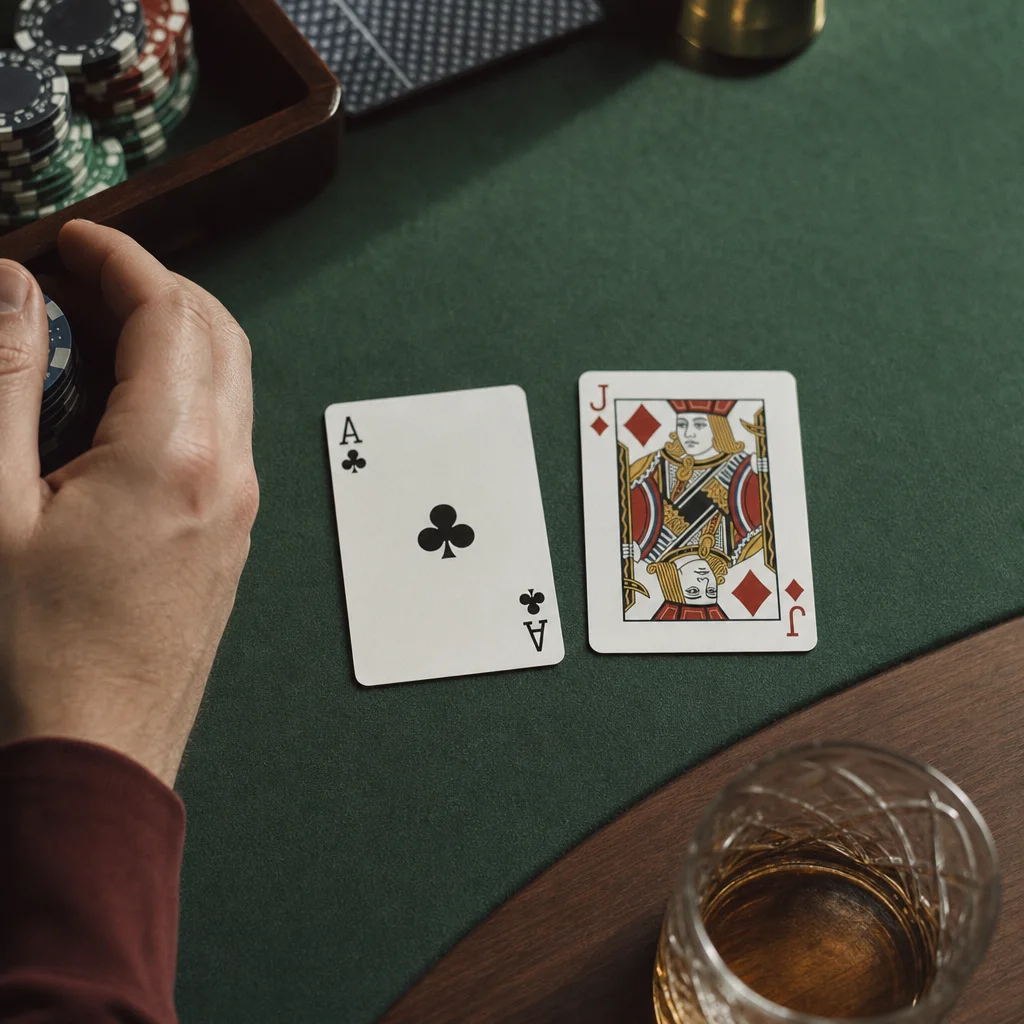
How Many Starting Hands Texas Holdem Actually Has
Deal two cards from a 52-card deck and you get 1,326 possible combinations. However, poker strategy doesn't care about suits themselves — it cares whether both cards share a suit or not. Once you group by rank and suitedness, the math collapses to 169 unique starting hands: 13 pocket pairs, 78 suited combos, and 78 offsuit combos. That's the number strategy charts are built around, and it's why every solver output and range chart you'll ever see uses a 13x13 grid rather than a full deck breakdown.
Not all 169 are equal, and that's the whole game. A pocket pair like queens plays very differently from a suited connector like 8-7, even though both count as one grid entry. A texas hold'em starting hands range groups these combos into tiers — premium, strong, speculative, weak — rather than memorizing each one alone.
Starting Hand Tiers and Texas Hold'em Starting Hands Odds
I find it easier to think in tiers than exact percentages, but the odds matter — they're what the tiers are built on. The table below shows texas hold'em starting hands odds for a few good texas holdem hands, measured heads-up against a random hand.
| Starting Hand | Tier | Win % vs. Random Hand |
|---|---|---|
| A-A | Premium | ~85% |
| K-K | Premium | ~82% |
| A-K suited | Strong | ~67% |
| 7-7 | Strong | ~66% |
| 8-7 suited | Speculative | ~55% |
| 7-2 offsuit | Weak | ~35% |
Texas Hold'em Starting Hands Range by Position
Position is the second variable, and it's just as important as the cards themselves. Acting first means more players can still wake up with a big hand behind you, so early position calls for a tighter starting hands texas holdem range. Acting last gives you information every other seat lacks, which is why the same two cards that are an easy fold under the gun become a standard open from the button — that's the core of any texas hold'em starting hands range built around position.
- Early position (UTG, UTG+1): premium pairs (T-T+), A-K, A-Q suited — roughly the tightest 8-10% of hands
- Middle position: adds suited broadways (K-Q, Q-J suited) and mid pairs like 8-8, 9-9
- Cutoff and button: widens to include suited connectors, suited aces, and offsuit broadways — often 30-40% of hands
- Small blind and big blind: defends a wider range facing a raise, since you're already partly invested in the pot

What Makes a Starting Hand Playable
Raw win percentage isn't the whole story. In my experience, three factors decide whether a hand is playable: how well it flops, how easily it plays post-flop, and how it performs multiway versus heads-up. Suited connectors like 6-5 suited win less often than A-K offsuit, but they flop straights and flushes that are hard for opponents to see coming. The post-flop decisions that follow — bet sizing, board reading — are covered in our strategy guide, not something the starting hand alone tells you.
Quick Rule of Thumb
Texas Hold'em Starting Hands to Avoid
Some combos lose money long-term regardless of position. Offsuit hands with a big gap and no pair — think J-3 offsuit or Q-6 offsuit — rarely flop well and rarely improve enough to justify the chips. I've tracked my own sessions, and the leak is almost always the same: limping into pots with hands that look 'live' but have no real path to a strong hand by the river.
Building a solid texas hold'em starting hands range isn't about memorizing all 169 combos overnight — it's about learning the tiers, respecting position, and being honest about which hands flop well. Once that foundation is set, post-flop questions become easier to layer on, and that's ground our strategy guide covers in depth. For the canonical rule set, see hold ’em starting-hand theory.
Want a Cross-Variant Reference?
NZT Poker's guide breaks down how opening ranges shift across hold'em variants.
See the Variants GuideDisclosure: This page contains affiliate links. We may earn a commission at no extra cost to you.