Omaha Starting Hands: Which Four-Card Holdings Play Best
Picking strong omaha starting hands is the biggest edge you build before the flop lands. A four-card hand can look monstrous and still be a trap, or look modest and hold up better than expected. In my experience grinding pot-limit Omaha, players struggle less with post-flop play and more with entering pots holding the wrong four cards. This guide covers what separates good omaha starting hands from pretty-looking junk, skipping post-flop wrap and blocker play — that's covered in our PLO strategy guide. For a second opinion on borderline spots, NZT Poker's variants guide is one resource worth a look, though the fundamentals below need no tool at all.
What Makes a Strong Omaha Starting Hand
Four cards create six possible two-card combinations, and that's the trap. A hand isn't strong just because it holds big cards — it's strong because those combinations work toward the same straights, flushes, or full houses. Connectedness and suitedness matter more than raw rank. AKQJ double-suited threatens the nut flush in two suits and connects for multiple straights, making it one of the best plo starting hands. AA72 rainbow has a big pair but nothing working alongside it.
Double-Suited and Connected Hands: The Best Omaha Starting Hands
Double-suited holdings with tight connectivity sit at the top of almost every omaha opening hands chart — they run toward two nut-flush draws while keeping straight potential alive. The best omaha starting hands share three traits: two suits, cards within a few ranks of each other, and no dead or duplicate cards. Here's how the top tier breaks down:
- AAKK double-suited — the strongest hand in Omaha, combining top pair equity with two flush draws
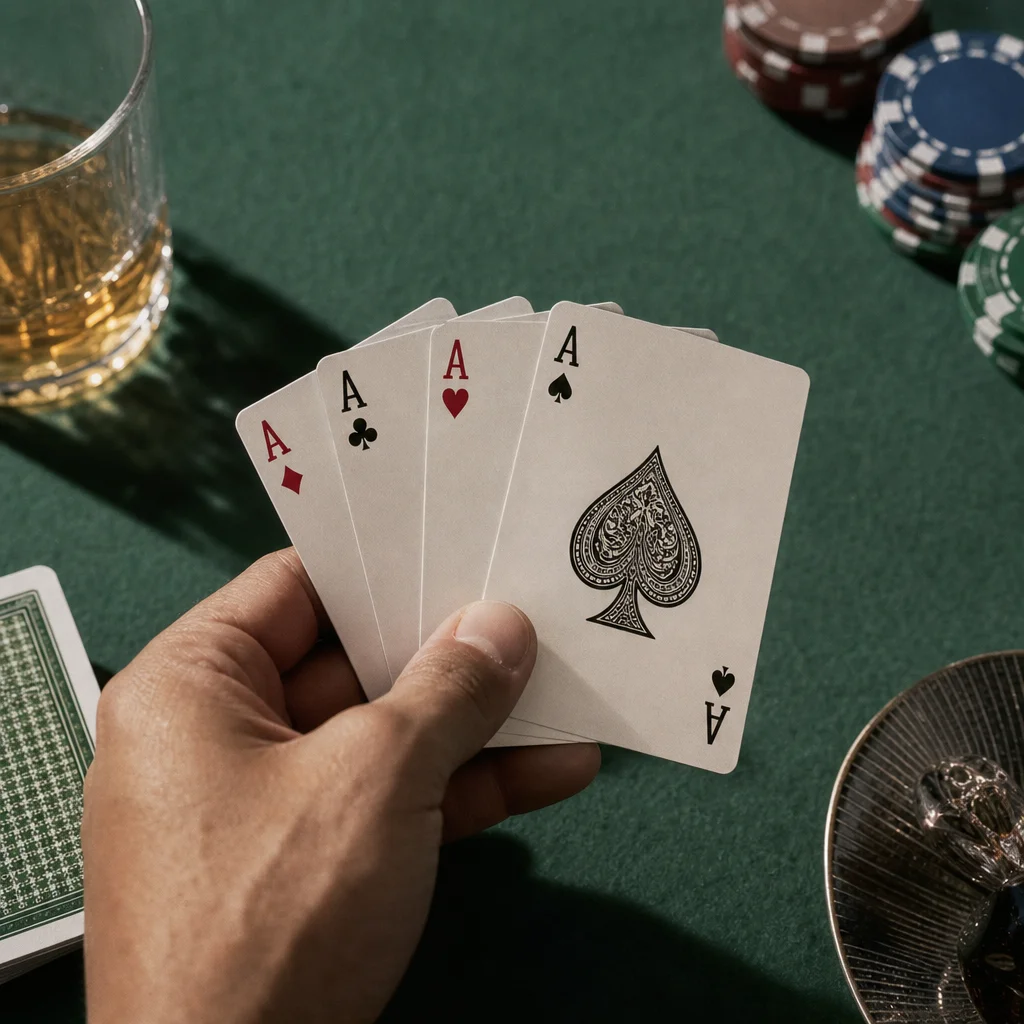
- AKQJ double-suited — premium connector with straight and flush coverage on nearly every board
- JT98 double-suited — a "rundown" that flops wraps and straights far more than its rank suggests
- KQJT double-suited — broadway rundown with two suits, playable from almost any position
Pocket Pairs in Omaha: Good on Paper, Risky in Practice
A pocket pair in Omaha isn't the asset it is in hold'em, and that catches transitioning players off guard. AA22 double-suited plays well because the deuces add connectivity and flush backup. AA83 rainbow, however, is much weaker despite the same top pair — the eight and three don't work with anything else. Small, disconnected pairs like 5522 rainbow are among the most overrated combinations; they rarely improve beyond two pair or a well-hidden set.
Hands That Look Strong But Are Not
Some hands read as powerful and play far worse than they look. Duplicate suits — three or four cards of one suit — actually weaken a hand, since only two cards can ever complete a flush and the extras are dead weight. Gapped, disconnected high cards such as AKQ2 rainbow look premium but miss the synergy that defines good omaha starting hands. Therefore, judging a hand by individual card ranks alone, the way you might in hold'em, is one of the fastest ways to misjudge Omaha equity.
| Category | Example | Why It Plays This Way |
|---|---|---|
| Premium double-suited | AAKK ds | Two flush draws plus top pair equity |
| Connected rundown | JT98 ds | Flops wraps and straights on many boards |
| Disconnected pair | AA83 rainbow | Pair with no supporting connectivity |
| Trap hand | AKQ2 rainbow | High cards that rarely work together |
How to Play Omaha Poker Hands Before the Flop
Preflop selection comes down to one question for every four cards: how many of them work together? Furthermore, position matters more here than in hold'em, since multi-way pots are common and speculative hands need room to see a cheap flop. Folding marginal, single-suited broadway hands from early position — and saving them for late position — improves win rate over a few thousand hands.
Quick Evaluation Habit
None of this replaces table time. I've reviewed hundreds of my own preflop decisions, and the pattern holds: double-suited connectors outperform disconnected big cards across every stake I've played. Some players lean on real-time software like NZT Poker to sanity-check borderline spots, though using in-hand assistance violates the terms of service on nearly every club app it supports, including PokerBros and PPPoker, and can trigger account closure. A HUD such as Hand2Note or a study tool like GTO Wizard builds the same instincts without that risk. For wrap and blocker play, see our PLO strategy guide. For the canonical rule set, see Omaha hold 'em.
Want a Deeper Look at Omaha Variants?
NZT Poker's variants overview covers how starting-hand values shift across club-app formats.
See the Variants GuideDisclosure: This page contains affiliate links. We may earn a commission at no extra cost to you.